On this page
Two ways to express a proportion
Percentages mean parts per hundred, and ppm means parts per million. Both can describe concentrations, although the scale used is very different. In conversations about deuterium, ppm is often more commonly encountered.
Why language precision matters
Changing the unit without explanation can make a difference seem larger or smaller than it is. A responsible label states the unit and does not leave the reader to assume what the number represents.
A unit is not a medical conclusion
Regardless of whether the value is written in ppm or percentages, it describes the composition of a sample. It does not directly indicate who would benefit, what dose would be relevant, or if there is a clinical result.
Quick check
When you see a number, ask: what is being measured, in what unit, by what method, and for which batch? These four questions are more useful than the isolated number.
Sources and further reading
These references explain the subject and the limits of the evidence. A reference is not proof that a product treats a disease.
Editorial transparency
Published by MECRO SYSTEM SRL. AI tools assist drafting and translation. No named medical reviewer is attributed to this article. This educational material does not replace individual medical advice. Report an error using the contact page, including the article address and the passage concerned.
You may also like
 Heavy water versus DDW: differences explainedUnderstand the difference between heavy water, deuterium and deuterium-depleted water, without confusion or health promises.
 pH, minerals and deuterium: three different thingsWhy pH, mineral content, and deuterium concentration should be read separately on a water label.
 Deuterium, diet and metabolism: how we read hypothesesA balanced context about deuterium, diet and metabolism: what can studies explore and why hypotheses are not clinical recommendations.
 PPM, isotopes and a number that needs contextWhat does ppm on the label of deuterium-depleted water indicate and why the concentration is not the only relevant thing.
 Deuterium: what does "stable isotope" mean?A clear guide about deuterium in water: what is a stable isotope, where it appears naturally, and what this term does not mean.
 How is deuterium-depleted water produced?An explanatory overview of isotopic separation and the information a manufacturer should clearly communicate.
 What is deuterium-depleted water?Introductory guide to deuterium-depleted water: definition, difference from heavy water and limits of health claims.
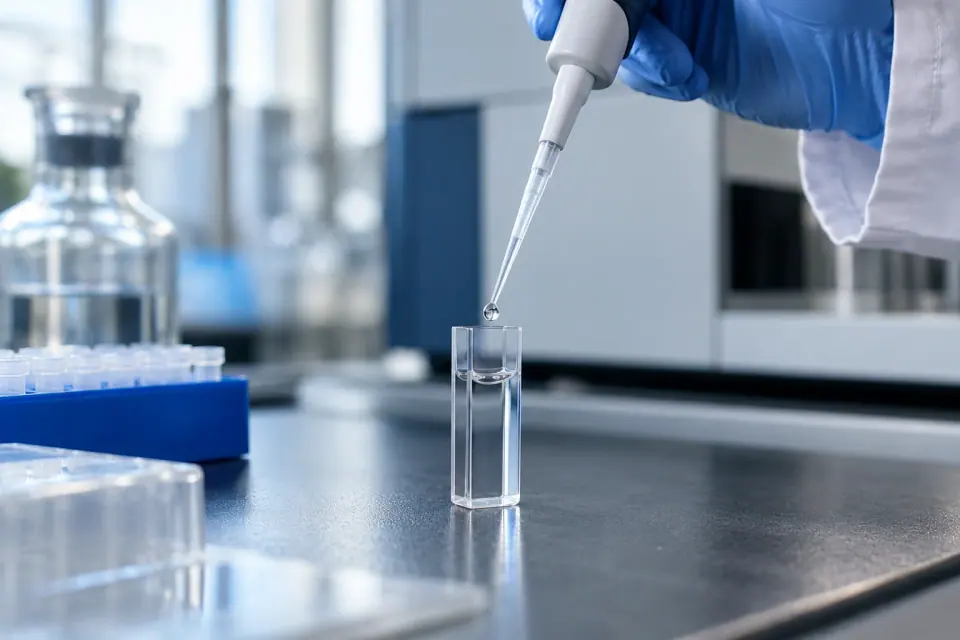 How is deuterium measured in waterWhat does a deuterium analysis mean, why does the ppm unit appear, and what questions deserve to be asked about a declared result.